Topology of Trees
Mathematical representations of branching structures through persistence-based descriptors.
Understanding neuronal structure through mathematics, topology and computation.
The NeuroTopology Group develops mathematical foundations for understanding neuronal structure and brain networks.
Biological systems are shaped by structure across many scales: from the branching architecture of individual cells to the organisation of tissues and complex networks. Our research develops the mathematical and computational frameworks for describing these structures and understanding the principles that connect them.
We combine topology, stochastic modelling, machine learning and computational approaches to represent, compare and synthesise complex biological forms. These methods allow us to investigate both the mathematical principles underlying biological organisation and the relationships between structure and function.
Our research program spans four complementary directions: mathematical foundations for biological structure, data-centric computation, generative biology, and the emergence of organisation from cells to larger-scale systems.
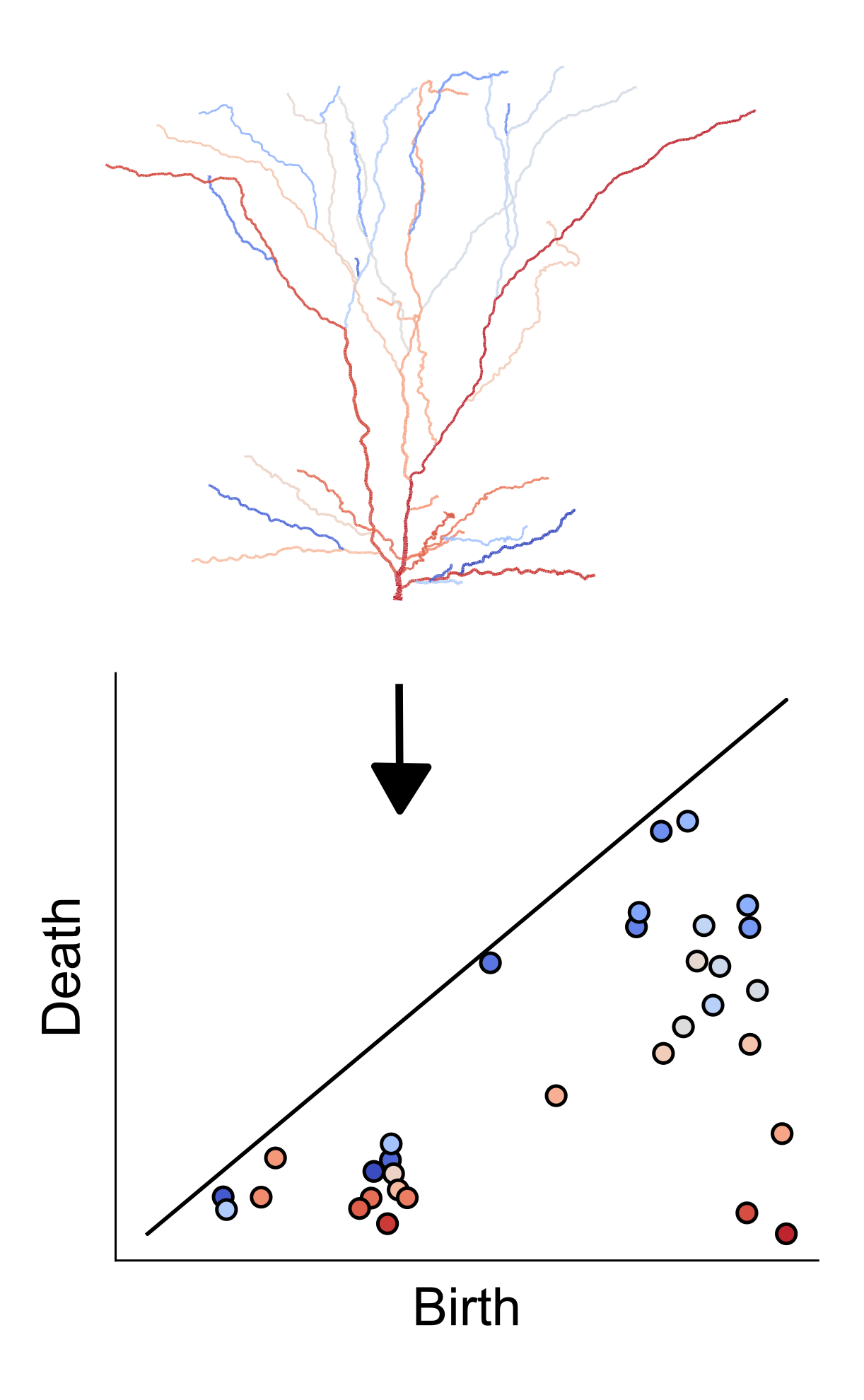
We develop the mathematical representations and theoretical frameworks for complex biological structures. Using ideas from algebraic topology, topological data analysis and stochastic modelling, we study how branching systems can be represented, compared and reconstructed while preserving biologically meaningful information.
Mathematical representations of branching structures through persistence-based descriptors.
Understanding which structural information can be recovered from topological summaries.
Extending topological representations to capture the topological embedding of biological structures, along with differences between species, during development, pathologies.
Temporal Topology Provides an Interpretable Framework for Neuronal Morphogenesis
2024From Trees to Barcodes and Back Again II: Combinatorial and Probabilistic Aspects of a Topological Inverse Problem
2020From Trees to Barcodes and Back Again: Theoretical and Statistical Perspectives
2018A Topological Representation of Branching Neuronal Morphologies
Kathryn Hess · Heather Harrington · Martina Scolamiero · Wojciech Chachólski
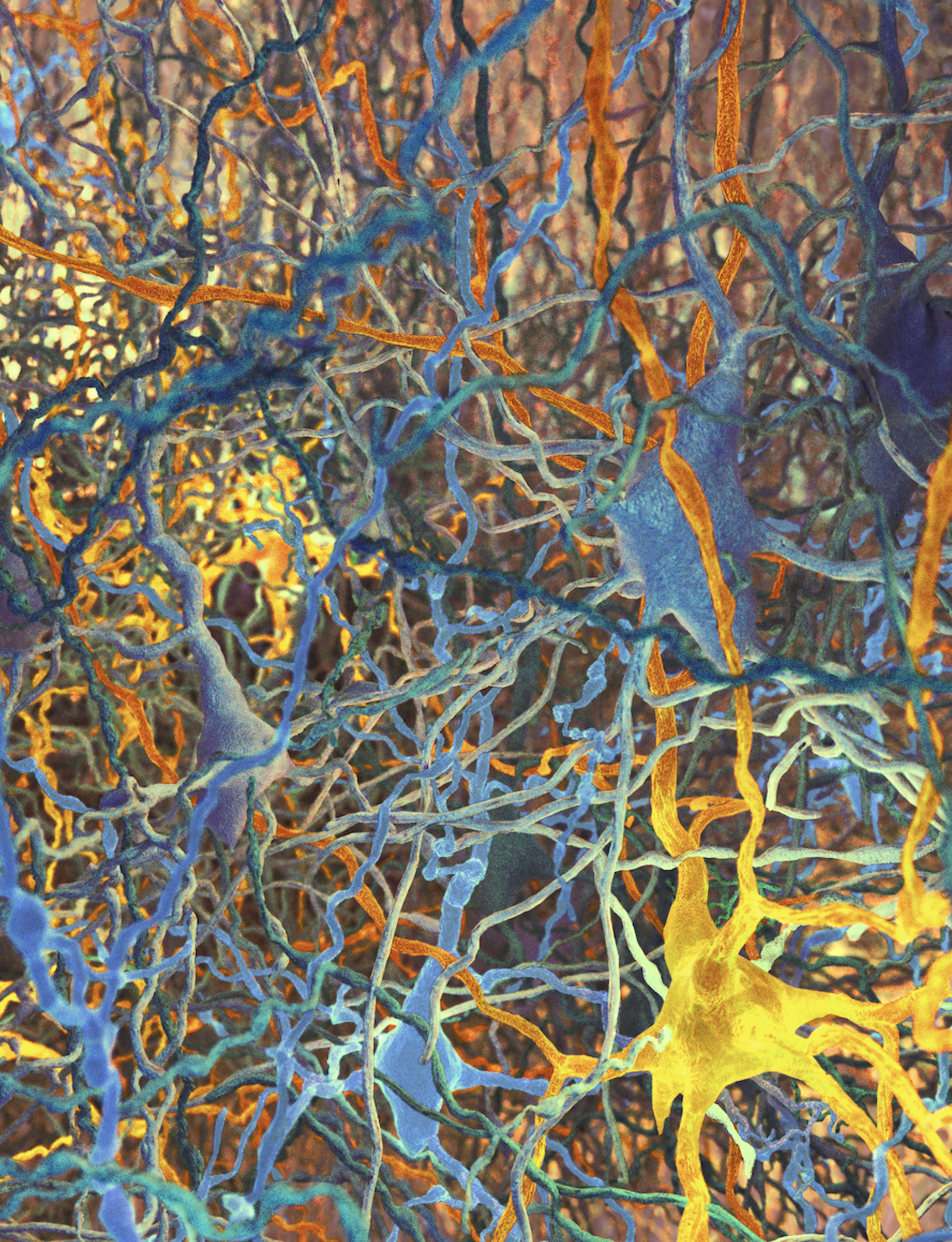
We develop computational approaches for learning from complex biological data. Topological representations, graph-based methods and machine learning provide complementary ways to compare cells, identify morphological classes and integrate structural information with other biological modalities.
Topological and graph-based approaches for classification, representation learning and comparison of complex cellular morphologies.
Quantitative representations for analysing and comparing branching morphologies across cell types, species and biological conditions.
Integrating morphological information with transcriptomic, electrophysiological and spatial measurements to study cellular diversity.
A Multimodal Spatial Atlas of Transcriptomic, Morphological, and Electrophysiological Cell Type Densities in the Mouse Brain
2024Deep Learning for Classifying Neuronal Morphologies: Combining Topological Data Analysis and Graph Neural Networks
2022A Tool for Mapping Microglial Morphology, morphOMICs, Reveals Brain-region and Sex-dependent Phenotypes
2019Objective Morphological Classification of Neocortical Pyramidal Cells
Henry Markram · Sandra Siegert · Chistiaan de Kock · André Ferreira Castro · Javier DeFelipe · Ruth Benavides-Piccione · Michael Winding
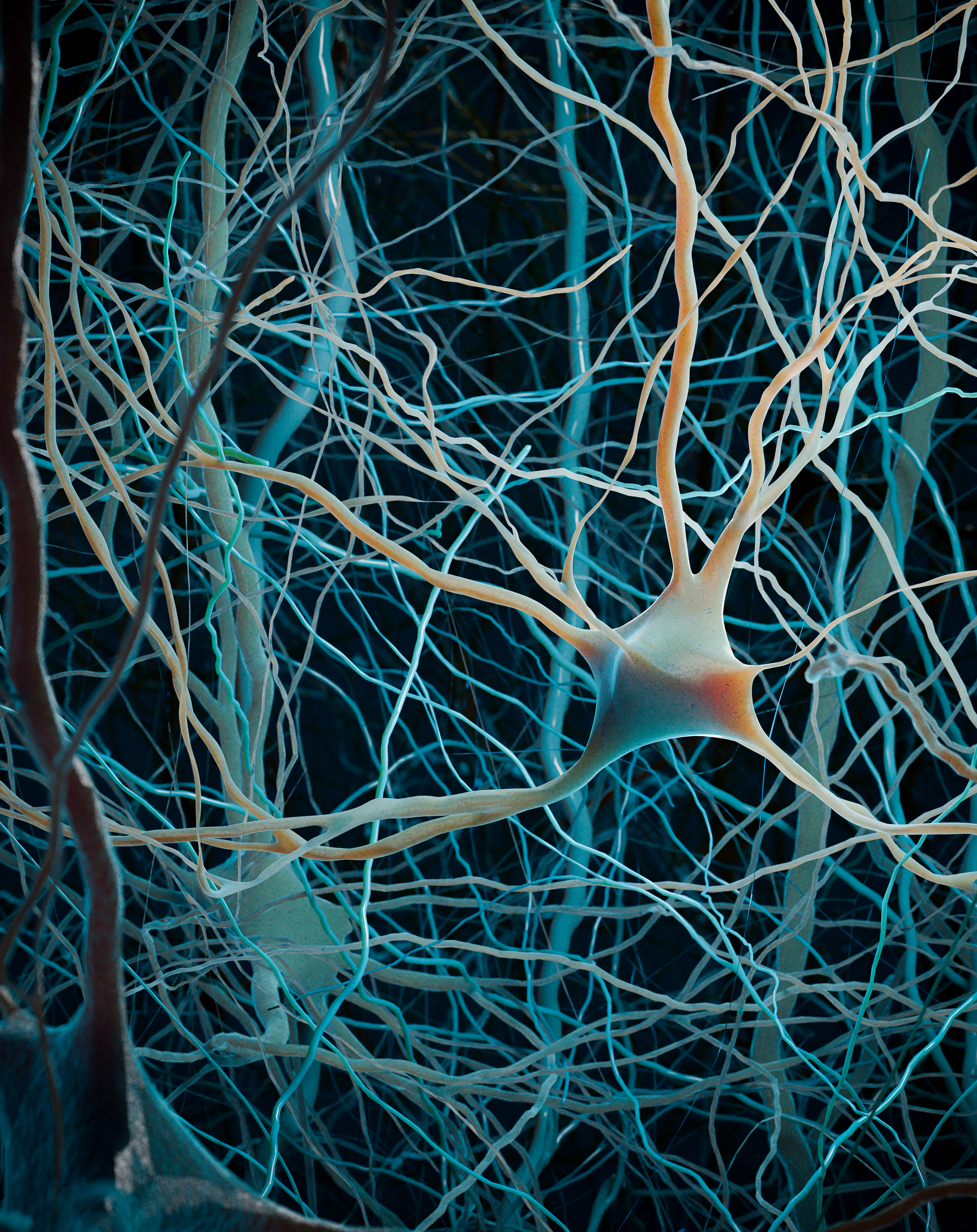
We use mathematical and computational models to investigate how complex biological structures are generated. By combining statistical descriptions, biological constraints and generative algorithms, we construct realistic cellular morphologies and use synthesis as a tool for testing hypotheses about biological structure and variability.
Computational generation of realistic dendritic morphologies from statistical, topological and biological constraints.
Generative modelling of long-range axonal morphologies and their projection patterns across brain regions.
Generating cellular structures within realistic tissue environments to investigate morphology in its spatial and biological context.
Investigating how neuronal morphology and electrophysiological properties constrain one another.
Contextual Cellular Growth (ConCeG) of Neural Cells for Realistic Grey Matter Tissue Generation for Diffusion MRI Simulations
2025Computational Generation of Long-range Axonal Morphologies
2025Generating Brain-wide Connectome Using Synthetic Axonal Morphologies
2023Controlling Morpho-electrophysiological Variability of Neurons with Detailed Biophysical Models
2022Computational Synthesis of Cortical Dendritic Morphologies
Marco Palombo · Hermann Cuntz · Alexis Arnaudon · Adrien Berchet · Remy Petkantchin
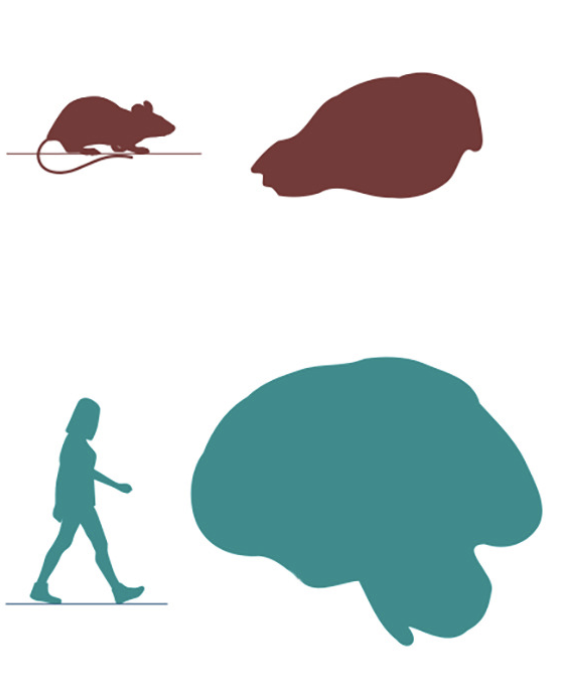
We investigate how properties of individual cells propagate across biological scales. Our work investigates how neuronal morphology shapes connectivity, how cellular diversity influences network architecture, and how local structural principles contribute to the organization of complex brain systems.
Linking single-neuron morphology to network-scale connectivity and investigating how cellular structure contributes to brain-network organization.
Understanding structural differences across species and investigating their consequences for neuronal and network organization.
Constructing brain-wide connectivity from synthetic axonal morphologies to investigate relationships between neuronal form and network structure.
Investigating how cellular structure and spatial constraints contribute to organization at tissue and system scales.
Spatial Continuity of Neurons Explains Non-random Network Architecture
2026Uncovering the Basis of Human Connectome Complexity: The Role of Neuronal Morphology
2026Self-organized Tiling Generates Tissue-scale Hyperuniformity During Development
2025Of Mice and Men: Dendritic Architecture Differentiates Human from Mouse Neuronal Networks
2025Generating Brain-wide Connectome Using Synthetic Axonal Morphologies
Michael Reimann · Natalí Barros-Zulaica · Mehmet Uçar · Daniela Egas Santander · Idan Segev
The NeuroTopology Group is supported through competitive research funding.
The project "Algebraic topology bridging the gap between single neurons and networks" is funded by Medical Research Council (MRC) from UKRI.
View funded project →